- India's digital payment revolution is led by UPI, which NPCI launched in 2016 under the oversight of the RBI and which moves money between bank accounts, usually within seconds.
- According to the Government of India, UPI handled about 24,162 crore transactions worth ₹314 lakh crore in 2025-26, and around 55.49 crore users had been onboarded by June 2026.
- Digital payments bring speed, convenience and clear records, and they support small businesses and financial inclusion.
- Cyber fraud, the digital divide and failed transactions are the main challenges that remain.
- Never share your UPI PIN, passwords or OTPs, and remember that receiving money never needs a PIN.
Technology is transforming the way India pays.
Introduction: A New Era of Payments
Imagine buying a notebook from a small shop, paying for a bus ride, or sending money to a friend without carrying cash. Today, in India, these activities can often be completed within seconds using a mobile phone. This change is part of India's digital payment revolution, which has transformed the way people manage money and carry out everyday transactions.
Digital payments allow people to transfer money electronically instead of using physical cash. With the growth of smartphones, internet access, banking services, and government initiatives, digital transactions have become increasingly common. Among the different payment methods, the Unified Payments Interface (UPI) has played a major role in making payments faster and more accessible.
What Are Digital Payments?
Digital payments are transactions in which money is transferred electronically between individuals, businesses, or organisations. They reduce the need to exchange physical currency and can make financial activities more convenient.
Major Types of Digital Payments in India
- Unified Payments Interface (UPI): Enables instant bank-to-bank transfers through mobile applications and UPI IDs. Payments can also be made by scanning QR codes.
- Debit and Credit Cards: Allow users to make payments at shops, restaurants, and online platforms.
- Internet and Mobile Banking: Help customers transfer funds, pay bills, and manage bank accounts digitally.
- Mobile Wallets: Allow users to make certain payments using money stored electronically in a wallet.
- Aadhaar Enabled Payment System (AePS): Enables eligible banking transactions through Aadhaar-based authentication at supported service points.
These methods provide people with different options according to their needs, access to technology, and banking facilities.
UPI: The Driving Force Behind the Revolution
What Is UPI?
The Unified Payments Interface was developed by the National Payments Corporation of India (NPCI) and launched in 2016 under the regulatory oversight of the Reserve Bank of India (RBI). It allows users to transfer money directly between bank accounts, usually within seconds.
Applications such as BHIM, Google Pay, PhonePe, and Paytm have helped popularise digital payments among Indian users.
The Remarkable Growth of UPI
The growth of UPI shows how rapidly India has adopted digital transactions. According to the Government of India, UPI processed approximately 24,162 crore transactions worth ₹314 lakh crore during the financial year 2025-26. By June 2026, around 55.49 crore users had been onboarded onto the platform. These figures highlight the growing importance of digital payments in the Indian economy. [Source: Ministry of Finance, Government of India.]
UPI is now used for a wide range of activities, including purchasing groceries, paying electricity bills, shopping online, and transferring money between family members. Its simple interface and quick transactions have made it especially useful for everyday payments.
How Digital Payments Are Changing India
A. Convenience in Everyday Life
Digital payments have reduced the need to carry exact change or visit a bank for routine transfers. People can often make payments at any time, provided their payment service and network are available.
For example, a student can pay for a book at a local shop by scanning a QR code, while a family member can transfer money to another city without physically visiting a bank.
B. Support for Small Businesses
Street vendors, shopkeepers, and small business owners increasingly use QR codes to accept digital payments. This allows customers to pay conveniently, even when they do not have cash.
Digital transaction records can also help business owners track their income and expenses. However, the benefits depend on access to suitable technology, reliable connectivity, and awareness of digital tools.
C. Greater Financial Inclusion
Financial inclusion means ensuring that individuals and communities can access useful and affordable financial services. Digital payments can support this goal by making transfers and certain banking services easier to access.
People in rural areas may benefit when digital services are supported by accessible banking facilities, reliable internet connections, and financial education. Nevertheless, digital payments alone cannot solve every problem related to financial exclusion.
D. Growth of the Digital Economy
Digital payments support online shopping, food delivery, travel bookings, and many other services. They also help businesses receive payments more efficiently and create electronic records of transactions.
As more people and businesses participate in the digital economy, payment technology becomes an important part of India's economic development.
Major Benefits of Digital Payments
The digital payment revolution offers several advantages:
- Speed: Many transactions are completed within seconds.
- Convenience: Users can make payments without carrying cash.
- Transparency: Electronic records can make it easier to track transactions.
- Accessibility: Digital services can connect users to banking facilities without requiring a visit to a bank for every transaction.
- Business efficiency: Digital payments can simplify the collection and recording of money.
- Reduced dependence on cash: People have an additional payment option for everyday purchases.
Despite these advantages, digital payments should be used responsibly. Cash and other payment methods remain important, particularly where internet access or digital facilities are limited.
Challenges of Digital Payments
Although India has made significant progress, some challenges still need attention.
A. Cyber Fraud and Online Scams
Fraudsters may use fake payment requests, misleading links, impersonation, or fraudulent QR codes to deceive users. People who are unfamiliar with digital technology may be especially vulnerable to such tricks.
To stay safe, users should:
- Never share their UPI PIN, passwords, or one-time passwords (OTPs).
- Verify the recipient's name and payment amount before confirming a transaction.
- Remember that entering a UPI PIN generally authorises a debit from their account; receiving money does not require entering a PIN.
- Avoid suspicious links and payment requests from unknown sources.
- Check their transaction history and report suspicious activity promptly to their bank or payment provider.
B. The Digital Divide
Not everyone has access to a smartphone, a stable internet connection, or the knowledge required to use digital payment applications. This difference in access is known as the digital divide.
Improving internet connectivity, providing digital literacy programmes, and making payment services easier to understand can help more people benefit from this revolution.
C. Technical Problems and Failed Transactions
Poor connectivity, bank server issues, or application problems can sometimes delay or interrupt payments. Such situations can be inconvenient, especially when a payment is urgent.
Users should check their transaction status before attempting another payment, as repeating a transaction without checking may result in an unintended duplicate payment.
The Role of the Government and Financial Institutions
The Indian government, the RBI, NPCI, and banks have all contributed to the development of digital payments.
Initiatives such as Digital India have encouraged the use of technology in public services and everyday activities. The expansion of banking infrastructure, mobile internet, and UPI has also supported this progress.
The RBI plays an important role in regulating payment systems and promoting safer transactions. NPCI operates UPI and other retail payment systems, while banks and payment providers offer services to users.
Together, these institutions must continue to improve security, reliability, consumer awareness, and access to digital financial services.
The Future of Digital Payments in India
India's digital payment system has considerable potential for further development. New technologies may make transactions more accessible and improve the way people manage their finances.
Some important areas of future development include:
- Improved security: Stronger safeguards and better fraud detection can help protect users.
- Rural accessibility: Better connectivity and digital education can expand access to payment services.
- International payments: Connections between payment systems in different countries may make certain cross-border transactions easier.
- Accessible technology: Voice-based services and simpler interfaces could help users who find conventional applications difficult to operate.
- Greater financial awareness: Schools, families, banks, and public institutions can teach people how to use digital payment services safely.
However, technological growth must go hand in hand with privacy protection, reliable services, and responsible use.
Conclusion: A Digital Future Built on Trust
India's digital payment revolution is more than a shift from cash to mobile phones. It reflects the growing role of technology in daily life and the country's efforts to build a more connected financial system. From small shopkeepers to large businesses, digital payments have created new ways to transfer money and conduct transactions.
At the same time, challenges such as cyber fraud, unequal access to technology, and technical failures cannot be ignored. The success of this revolution depends not only on faster payments but also on safety, trust, and inclusion.
As students and future citizens, we should understand both the opportunities and the responsibilities that come with digital technology. With continued innovation, public awareness, and responsible use, India can work towards a digital payment system that is secure, accessible, and beneficial to everyone.
Jai Hind.
Sources
Every figure in this article was checked against the source it comes from on 20 October 2026.
| What the article says | Source |
|---|---|
| UPI was developed by NPCI; its pilot launch was on 11 April 2016 | NPCI, About UPI |
| About 24,162 crore UPI transactions worth ₹314 lakh crore in 2025-26 | Written reply in the Lok Sabha by the Minister of State for Finance, 20 July 2026, as reported by All India Radio News |
| Around 55.49 crore users onboarded onto UPI by June 2026 | The same Lok Sabha reply, 20 July 2026 |
| Receiving money never needs a UPI PIN | NPCI, Fraud Awareness |
Frequently Asked Questions
What is the digital payment revolution in India?
It is the shift from cash to money transferred electronically, through mobile phones, cards and online banking. The Unified Payments Interface (UPI), which moves money directly between bank accounts, usually within seconds, is the driving force behind it.
Who developed UPI, and when was it launched?
UPI was developed by the National Payments Corporation of India (NPCI) and launched in 2016 under the regulatory oversight of the Reserve Bank of India (RBI). NPCI operates UPI, and banks and payment providers offer it to users.
How many UPI transactions happen in India?
According to the Government of India, UPI processed about 24,162 crore transactions worth ₹314 lakh crore in the financial year 2025-26, and around 55.49 crore users had been onboarded onto the platform by June 2026.
How can you stay safe while paying with UPI?
Never share your UPI PIN, passwords or OTPs; check the recipient's name and the amount before confirming; and avoid suspicious links and payment requests from unknown sources. Entering a UPI PIN generally authorises a debit, and receiving money does not require a PIN. Report anything suspicious to your bank or payment provider promptly.
What are the main challenges of digital payments?
Cyber fraud and online scams, the digital divide (not everyone has a smartphone, a stable internet connection or the knowledge to use payment apps), and technical problems that can delay a payment, or cause a duplicate one if it is repeated without checking its status.
Commerce at Doon Global School
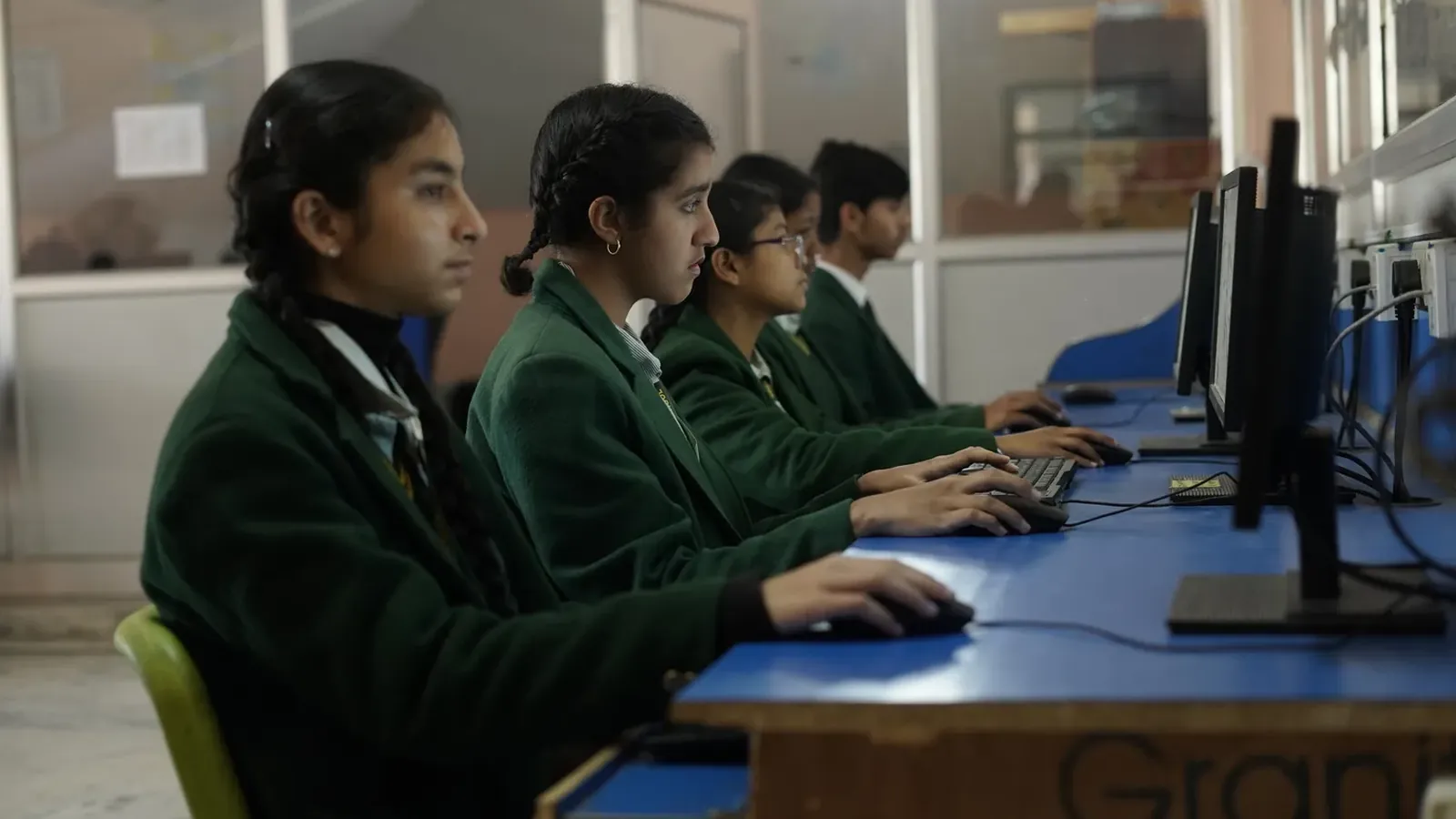
The photograph in this article shows students in the computer lab at Doon Global School. Students who want to study how money, banks and businesses work can choose the Commerce stream in Classes XI and XII, which covers Accountancy, Business Studies, Economics, English, and Mathematics or Informatics Practices (see CBSE academics at DGS).
About this article: Aarav Mishra, Class 11 E, wrote it for the school's Student Voices series. The key takeaways, the sources table, the questions and answers and this section were added by the school's website team and only repeat what Aarav wrote, what the sources say or what the school's own pages say.