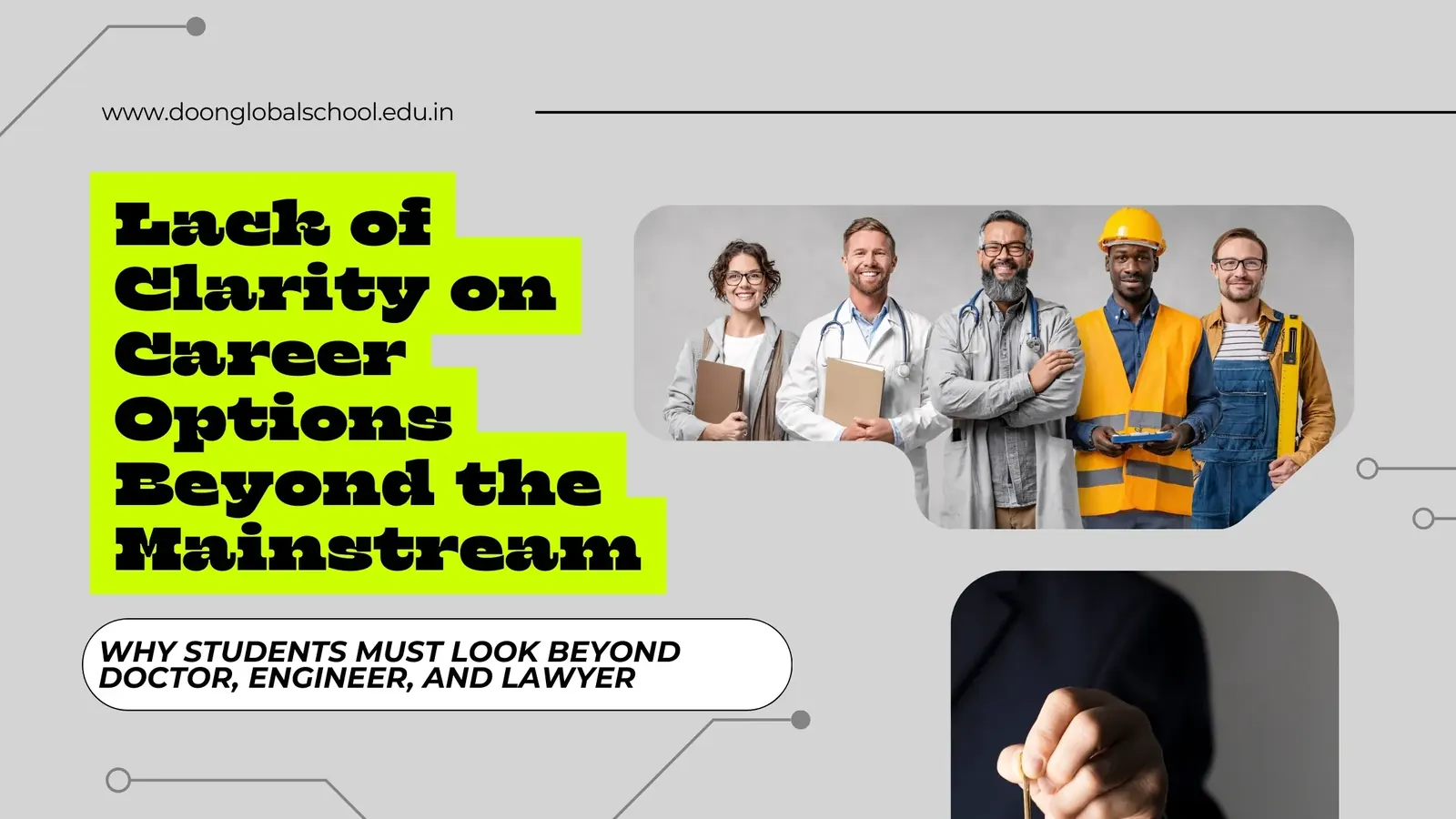
Career discussions often default to medicine, law and engineering, but students now have many other paths to investigate. This guide offers a framework for exploring emerging fields without treating any one option as a guaranteed outcome.
Why Students Gravitate Toward Traditional Careers
Four primary factors drive students toward conventional career choices:
Parental and Societal Expectations
These professions are positioned as markers of respectability and financial security in Indian culture. Parents naturally want the best for their children, and these careers have historically been seen as "safe" choices.
Limited Institutional Awareness
Most schools neglect to expose students to emerging opportunities in sectors like user experience design, digital marketing, game development, or data science. Students simply don't know what else is possible.
Risk-Averse Family Mindsets
Families favor predictable career trajectories over creative pursuits perceived as unstable. This caution is understandable but can limit children's potential in a rapidly changing world.
Peer Conformity Pressures
When classmates all pursue standardized entrance exams like NEET and JEE, individual students feel pressure to conform rather than explore alternative paths that might better suit their talents and interests.
Consequences of Restricted Career Vision
Limiting career options to just three paths creates several problems:
- Excessive competition for limited slots at elite medical and engineering institutions
- Psychological strain among students forced into unsuitable fields
- Misalignment between individual talents and chosen fields
- Overlooked opportunities in high-demand technical sectors
- Skills shortage - India faces a shortage of skilled professionals in areas like cybersecurity, data science, and design
Alternative Career Pathways
Today's students have access to exciting career options across multiple domains:
Technology Sectors
- Artificial Intelligence and Machine Learning
- Cybersecurity specialists
- Web and mobile app development
- User Interface/User Experience (UI/UX) design
- Cloud computing engineers
- Data science and analytics
Creative Industries
- Animation and visual effects
- Filmmaking and production
- Esports and gaming
- Graphic and industrial design
- Content creation and YouTube
- Photography and videography
Business Domains
- Digital marketing and SEO
- Startup creation and entrepreneurship
- Product strategy and management
- Event coordination and management
- E-commerce specialists
- Business analytics
Social-Impact Fields
- Environmental science and sustainability
- Mental health counseling
- Content creation for education
- Public policy and research
- Non-profit management
- Social entrepreneurship
How Students Can Find Their Career Direction
Students can achieve clarity about their career path through several approaches:
- Self-assessment tools - Online aptitude tests and personality assessments
- Real-world internship experience - Summer internships and shadow days
- Skill-development platforms - Online courses from Coursera, Udemy, YouTube
- Mentorship connections - Speaking with industry practitioners
- Career fairs and workshops - Exposure to diverse fields
- Career counseling - Professional guidance from trained counselors
Stakeholder Responsibilities
Parents and educators should support broader career exploration by:
- Developing exploration across multiple disciplines
- Emphasizing practical competencies over credentials alone
- Facilitating career exposure events at school
- Remaining receptive to non-traditional aspirations
- Connecting students with diverse role models
- Providing exposure to different industries
The Future of Work
According to World Economic Forum research, 65% of today's students will work in jobs that don't even exist yet.
This statistic alone should reshape how we think about career planning. Rather than training students for specific, static jobs, schools must prepare them to succeed in dynamic, interdisciplinary fields.
How DGS Supports Career Exploration
At Doon Global School, we take career guidance seriously. Our approach includes:
- Professional career counseling for students from Grade 9
- Aptitude and interest assessments
- Industry expert sessions and workshops
- Alumni mentorship programs
- College and university guidance
- Exposure to diverse career fields
Conclusion
Passion-driven professional selection yields superior outcomes compared to safety-focused decisions. When students pursue careers aligned with their genuine interests and talents, they're more likely to excel and find fulfillment.
Parents, educators, and students must work together to expand the conventional career conversation beyond doctor, engineer, and lawyer. The future belongs to those who explore possibilities, develop diverse skills, and embrace change - not those who follow predetermined paths set decades ago.