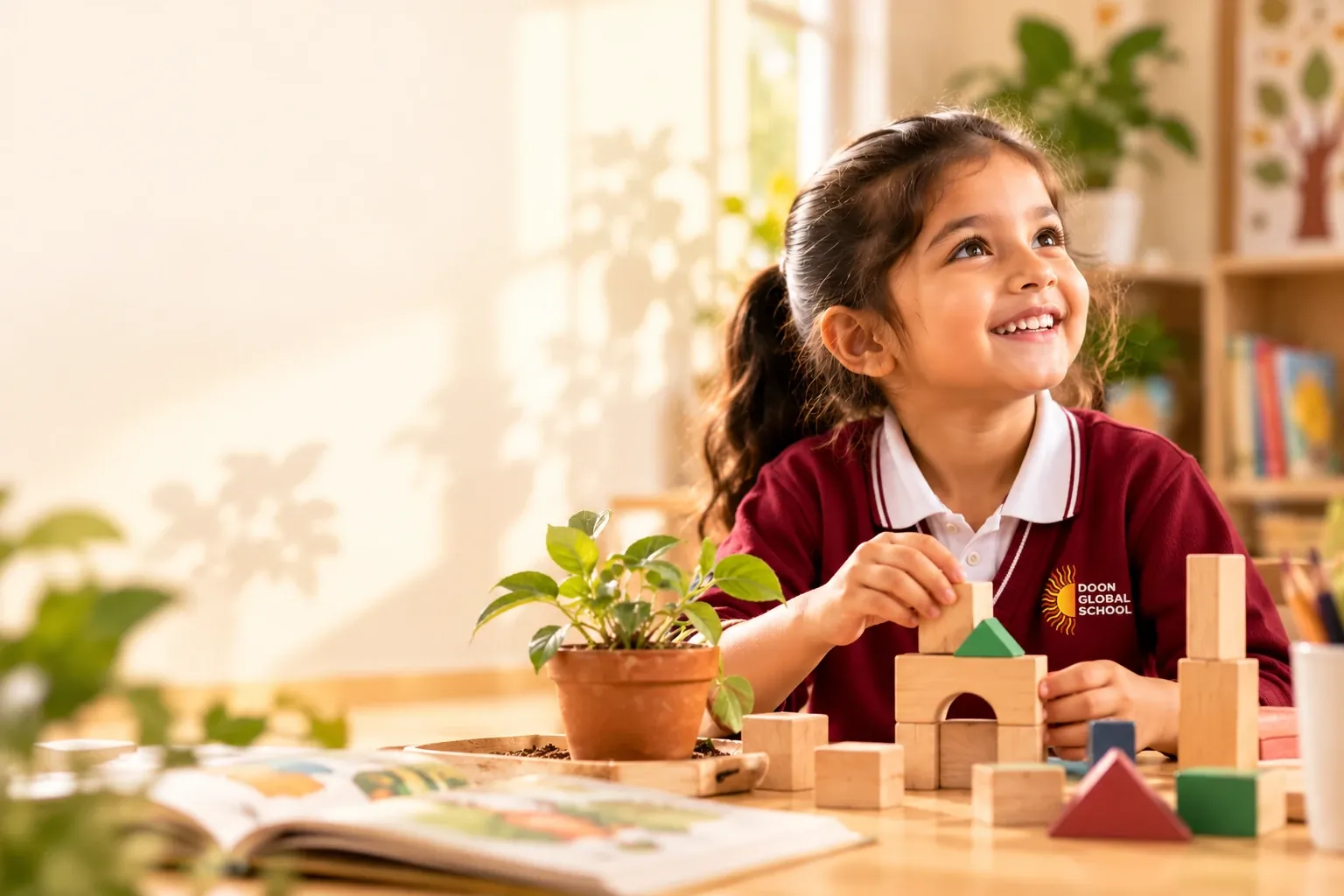
A smiling Grade I child building with wooden blocks beside a potted plant

DGS 2027 · New classesSession 2027-28 · Grade I

Grade I at Doon Global School, Dehradun

Chhota sa bag. Bade sawaal.

Imagine your child arriving with a question and leaving with a story: “I planted a seed. I counted the leaves. I told my friend.” Sparks turns these small discoveries into strong foundations in reading, number sense and confidence.

Know more about Sparks Grade I

Our admissions team will be in touch soon. Your details are used only to reply to this enquiry. Privacy policy
Sparks · Grade I · Session 2027-28

A School Day That Builds Foundations

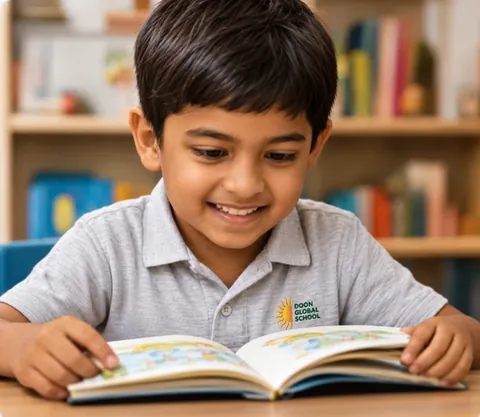
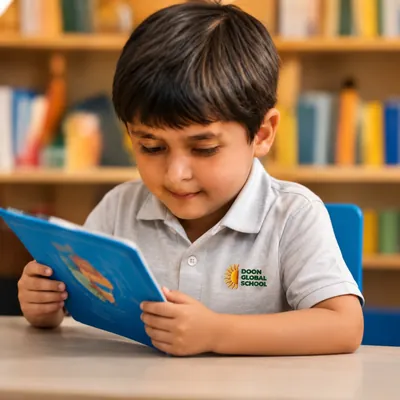
A child reading a picture book

Words become stories

Daily talk, rhymes, phonics and shared reading. Drawing grows into writing; children can speak in their comfortable language while English develops through use.

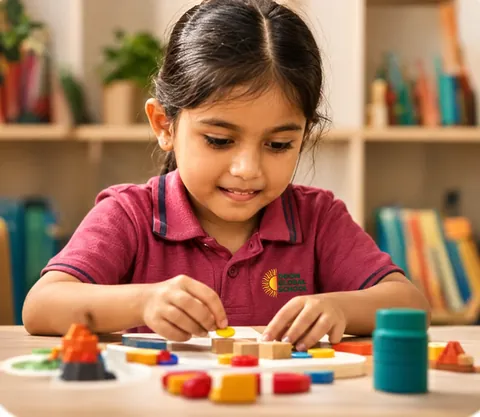
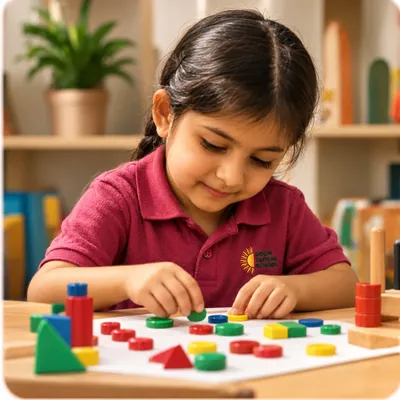
A child sorting coloured counters

Numbers become real

Counters and blocks first, pictures next, symbols after. Daily number talks, pattern games and hands-on discovery make understanding visible.

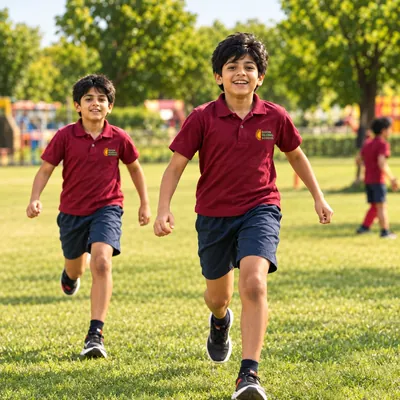
Two children running on a school field

School feels safe

Circle time, daily outdoor play, arts and a weekly make-and-show moment. A gentle six-week settling-in routine gives each child time to belong.

The Sparks promise

“I notice, try, explain and grow”

The learning cycle, made for six-year-olds: real materials, talking it through, drawing, exploring in pairs and short activities of 10 to 20 minutes.

  1. NoticeA seed, a sound
  2. TryBuild, count, play
  3. Say or showMy words, my work
  4. GrowFeedback, then retry
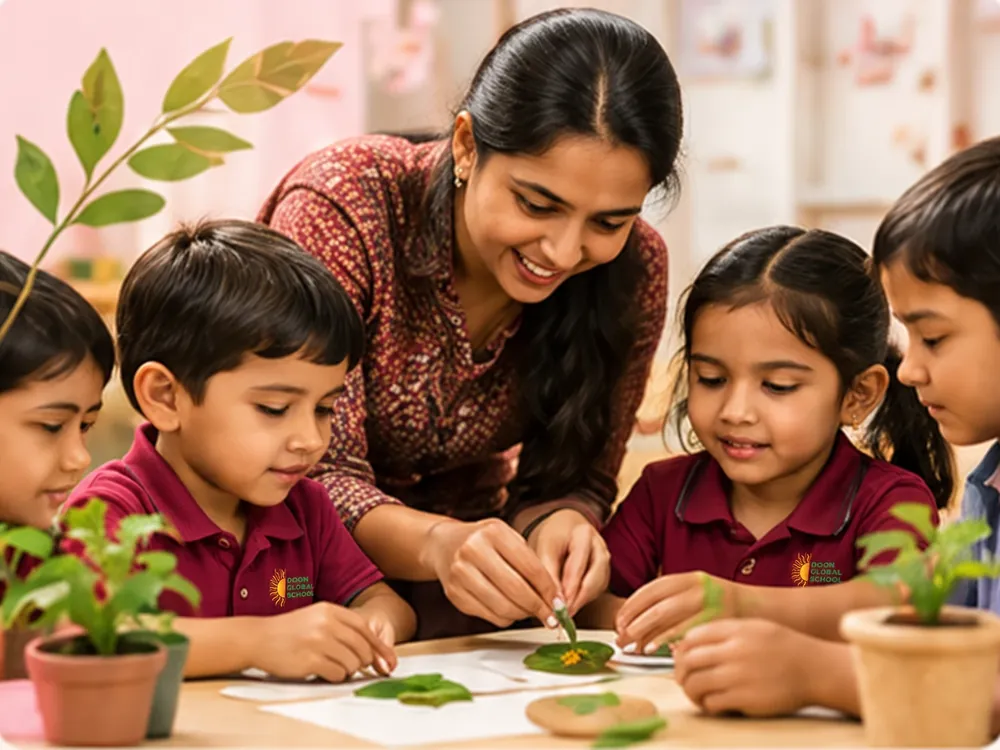
A teacher and young children looking closely at leaves
A typical day at Sparks

A Spark’s Day and Week

The rhythm does the teaching: predictable anchors, short varied blocks, movement between every sit-down, and a calm close.

  • Arrival and circle time · greeting by name, a feelings check with pictures and the day’s plan in child language.
  • Literacy block · a rhyme or story, phonics-informed practice, shared reading, and early writing through drawing and labels.
  • Movement and outdoor play · daily and protected, never withdrawn as a consequence.
  • Number play · a ten-minute number talk and a hands-on station: counters, blocks, patterns, comparing.
  • Discovery and arts · observe-and-draw, the nature table, blocks and role-play corners, music and craft on rotation.
  • Story close · a read-aloud, “what did I try today?” and a pack-up song: school ends on a good note.
  • Make-and-show · one make-and-show moment every week, and a show-and-tell rota so every child presents fortnightly.
  • Friday celebration circle · the week closes together, every week.
Foundations for life

How Reading and Number Grow

A child smiling over an open storybook

Building a confident relationship with reading

  • Circle conversations, rhymes and retelling, in the language of comfort while English grows through stories and use
  • Short daily phonics-informed practice: playful, never worksheet-drilled
  • A daily read-aloud, and a levelled library so every child holds a book they can win with
  • Pictures, then labels, then sentences; invented spelling is welcomed as thinking
A child arranging counters and blocks

Number sense, from exploration to symbols

  • Counters, blocks, beads and real objects first; pictures next; symbols after
  • Ten minutes of number talk daily: “how did you see it?”
  • Sorting, sequencing and measuring: maths as noticing, not only sums
  • Dice, dominoes and board games carry the practice
Wellbeing at the core

Settled. Safe. Smiling.

At six, wellbeing is not a module: it is how the classroom runs.

The six-week settling-in routine

Staggered goodbyes, the same teacher at the door every day, and a no-rush rule for the slow-to-warm child.

A welcome buddy

A named buddy, a feelings check and a calm corner support belonging.

Feelings check

Happy, sad, angry, scared, excited: a picture-based check at circle time, and a calm corner, never a punishment corner.

Parent partnership

Concerns are discussed privately with families. At six, parents are step one of care.

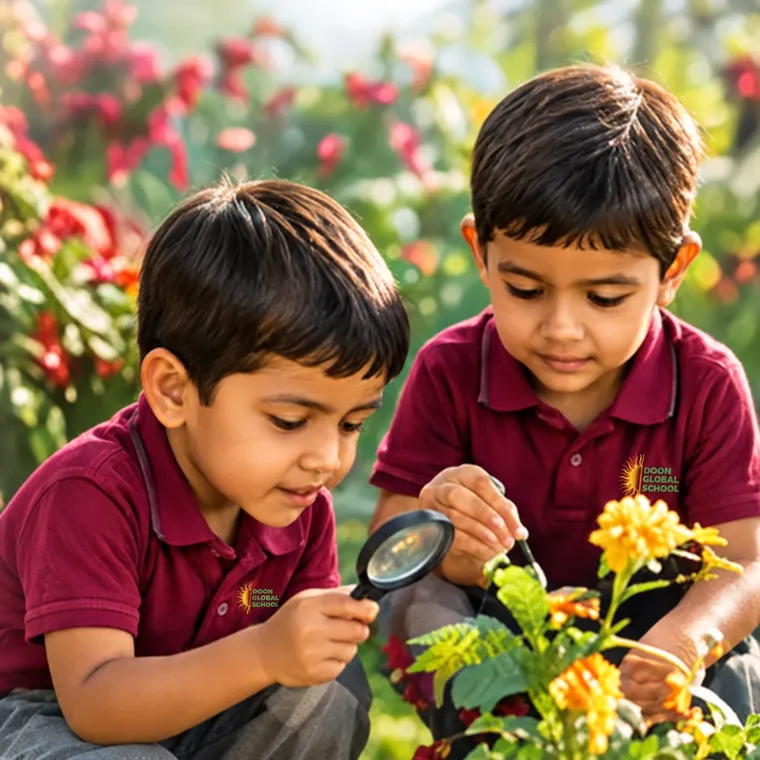
Two children looking at flowers through a magnifying glass
A child’s crayon drawing of two figures
Three small habits

At Home, Big Support

Read together

10 minutes daily.

A steady bedtime

An early, consistent sleep routine.

“Show me what you made”

Ask once a week.

No worksheet homework or parent-made projects. Learning materials come from school.

The road to April 2027

Planned Milestones

Nov-Dec 2026Pilot in existing classes
Jan-Feb 2027Review and refine
April 2027Session 2027-28 launch
Common questions

Sparks FAQ

Every child joining Grade I: Sparks begins with every Grade I child, in every section, not a selected batch. Speak with DGS Admissions about Grade I entry and the family orientation.

No. There is no selection for Sparks, and inside the class there are no written tests and no public ranks. Admission to Grade I itself is through DGS Admissions, as for any class.

A monthly talk-and-show portfolio captures your child’s work and words. Teacher observations and a conversation each term show progress and next steps, for your child alone and never ranked.

No child-facing screens are required. Goalkeepers is for teachers and parents: participation, portfolio snapshots and family messages.

No. Learning materials come from school; there are no purchase demands, no worksheet homework and no parent-made projects.

Three small habits: read together for 10 minutes daily, keep a steady bedtime, and ask once a week: “Show me what you made.”

That is expected, and it is planned for. A gentle six-week settling-in routine gives each child time to belong: staggered goodbyes, a named welcome buddy and the same teacher at the door every day. A slow-to-warm child is never rushed.

No. Children can speak in their comfortable language while English develops through use: daily talk, rhymes, phonics, stories and shared reading.

It is planned for session 2027-28: a pilot in existing classes in November-December 2026, review and refinement in January-February 2027, and the launch in April 2027.

Call DGS Admissions on +91 74559 97333, send the form at the top of this page, or message us on WhatsApp, and the team will arrange a visit.

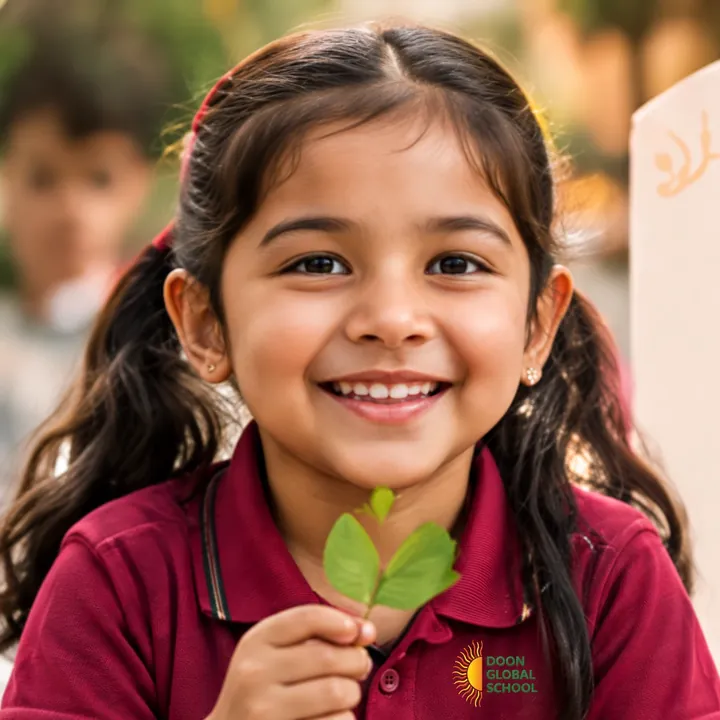
A smiling child holding a small leaf
Big questions begin with little steps.
One school. One ladder. Three doors.

Learning Pathways at DGS

Sparks light it. Pathfinders find it. Playmakers make it happen.

Admissions 2027-28

Your Next Step

Speak with DGS Admissions about Grade I entry and the family orientation. Sparks begins with every Grade I child, not a selected batch.